




 The source for international yachting & marine news



Lagoon 38: Sailing Performance Review
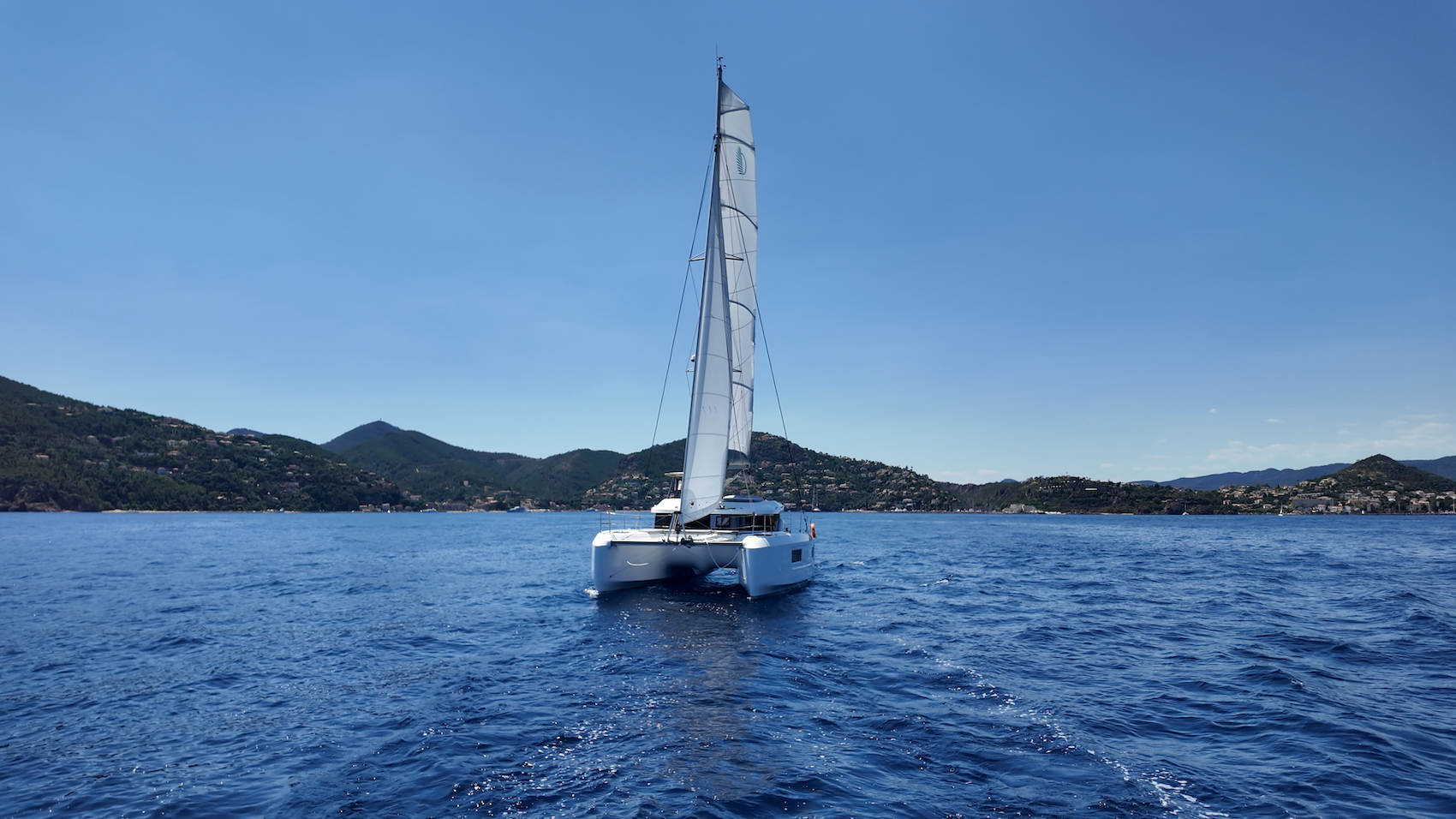
Lagoon once again redefines comfort at sea, focusing on expansive living spaces and effortless handling with the new Lagoon 38, which we had the opportunity to sea trial over the past few days.
Today, the Lagoon range extends from accessible, compact models like the new Lagoon 38 all the way to the ultimate luxury of the flagship EIGHTY 2, a 23.91-meter (78’5″) giant of the seas. Founded in 1984 as JTA (Jeanneau Techniques Avancées), the company originally served as the technology and racing division of the renowned French shipyard Jeanneau. With more than 7,000 units built, Lagoon is now the world’s leading catamaran manufacturer.
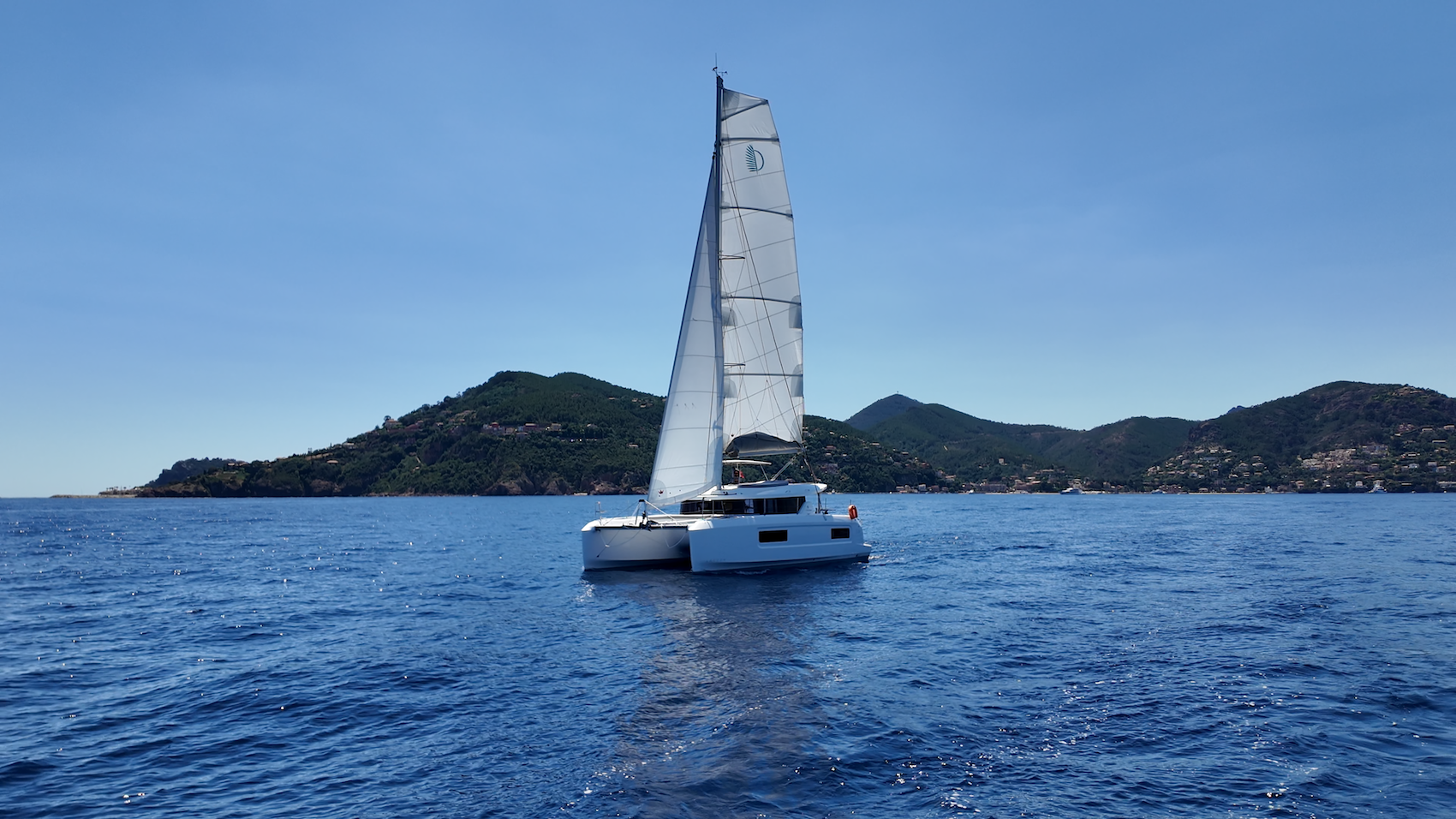
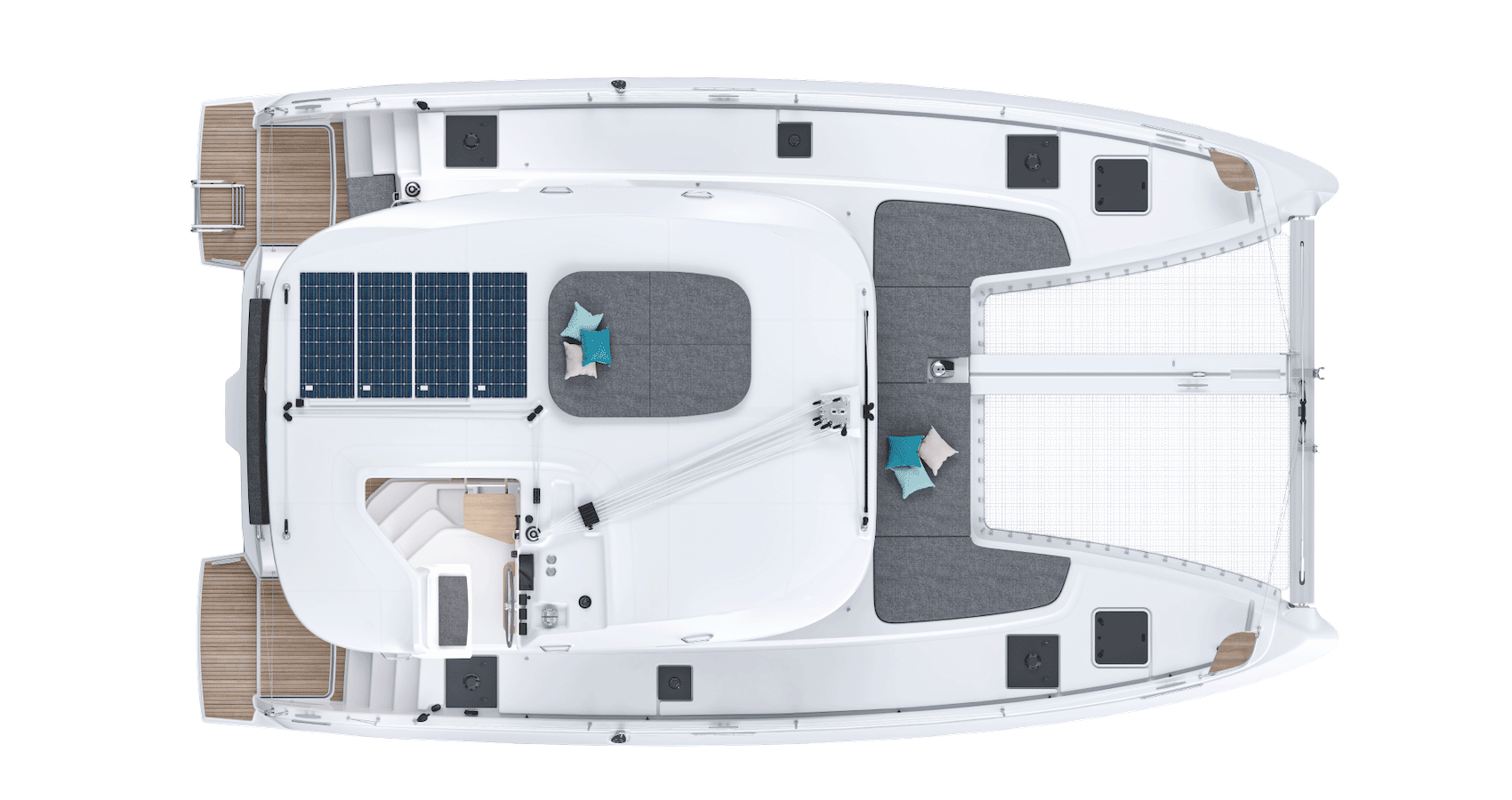
Lagoon 38 features an overall length of 13.12 meters (43’1″) and a beam of 6.65 meters (21’10”), dimensions that make it exceptionally easy to handle. With this model, Lagoon has simplified onboard sail handling as much as possible. At the bow, the boat is equipped with a self-tacking jib, while every sail control is managed through a single winch located on the coachroof next to the helm station. Here you’ll find the halyards and control lines led aft through rope clutches, the Garmin display, and the twin 29 HP engines’ throttle controls.
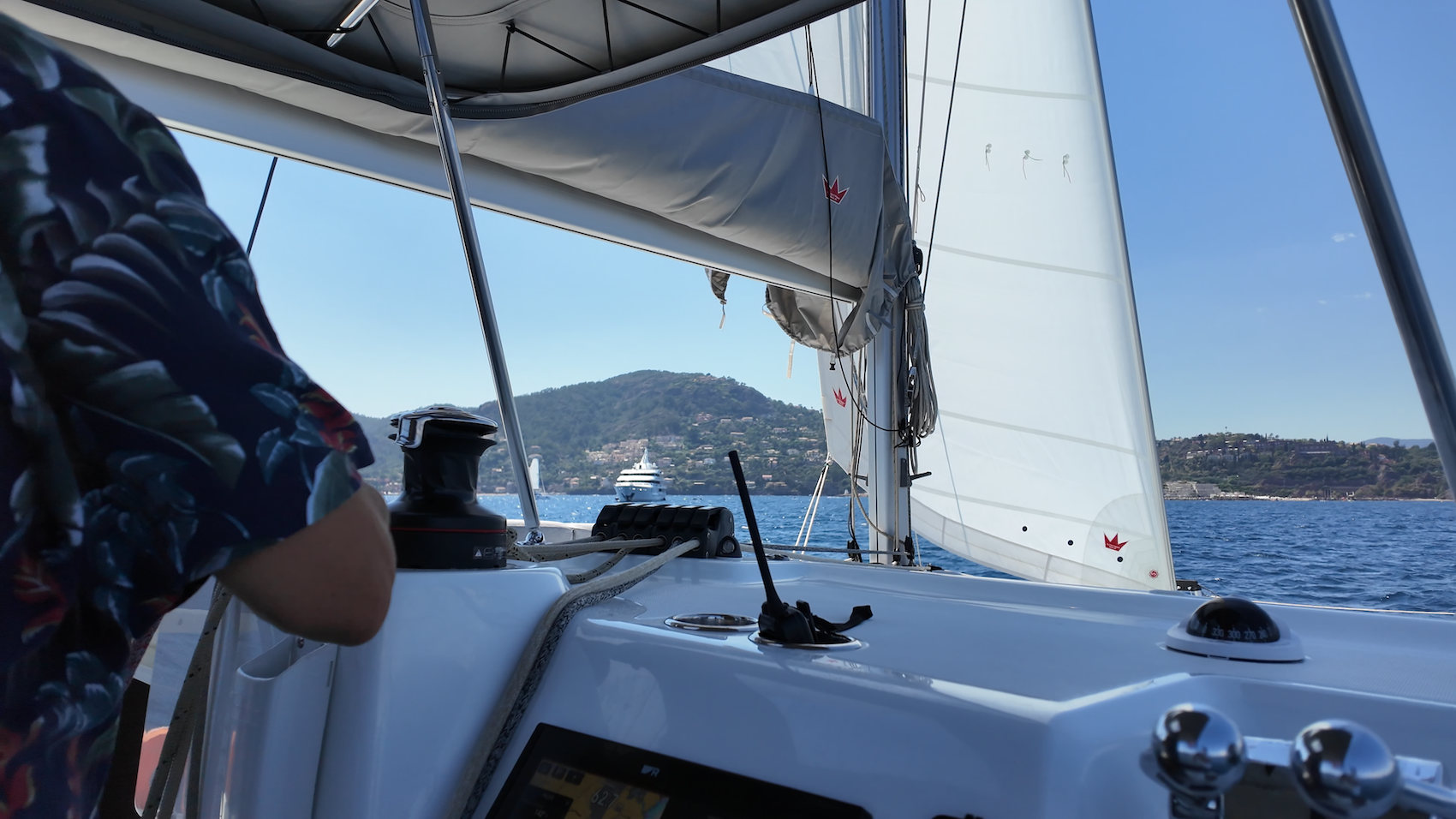
The T-top features a fabric enclosure that can be fully closed whenever needed, providing protection from cold weather. The helm console is comfortable and includes a double seat offering excellent visibility over the entire boat. Unfortunately, during our sea trial the optional Code 0 sail was not installed, even though the Lagoon 38 is designed to accommodate it.
Weather Conditions and Handling
Today’s conditions feature a slight chop with winds peaking between 13 and 15 knots—ideal for a relaxed sea trial. We leave the dock using the twin engines with complete ease. Despite the Lagoon 38’s generous 6.65-meter (21’10”) beam, the independently controlled throttles allow the catamaran to pivot within a surprisingly tight radius. That’s a major advantage, because docking and departing can often be the most challenging part of operating a catamaran due to its width. Once clear of the harbor, we unzip the lazy bag, attach the main halyard, and hoist the mainsail using the electric winch. Deploying the self-tacking jib is just as quick and effortless: simply load the sheet onto the winch and trim it in by hand, without even needing a winch handle.
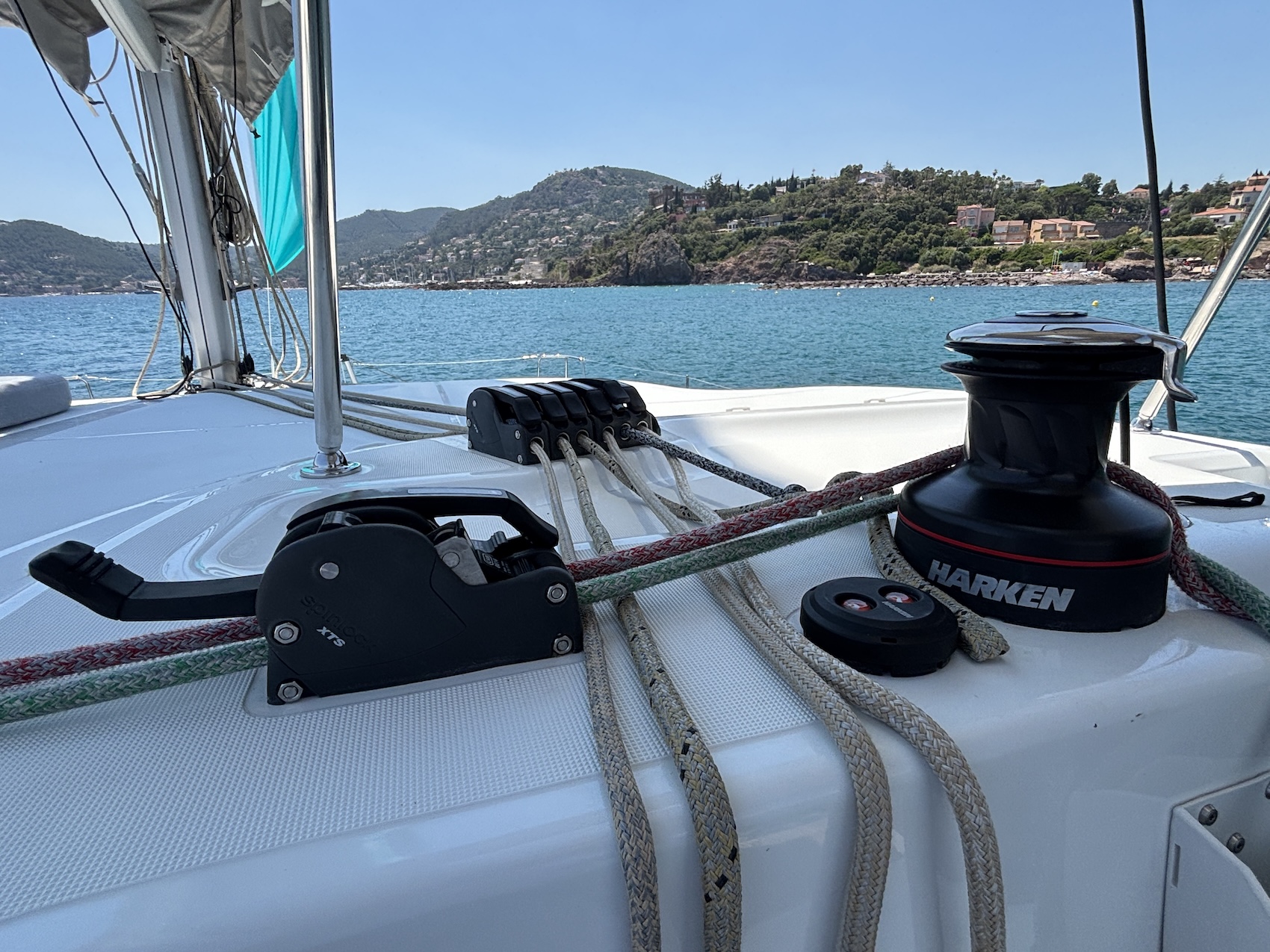
What immediately impresses me about the Lagoon 38 is just how easy it is to sail and maneuver. There are three of us on board, yet I can perform every operation by myself without asking for assistance or leaving the helm. When necessary, I can also rely on the autopilot to hold course while I stow the fenders or make adjustments to the sails.
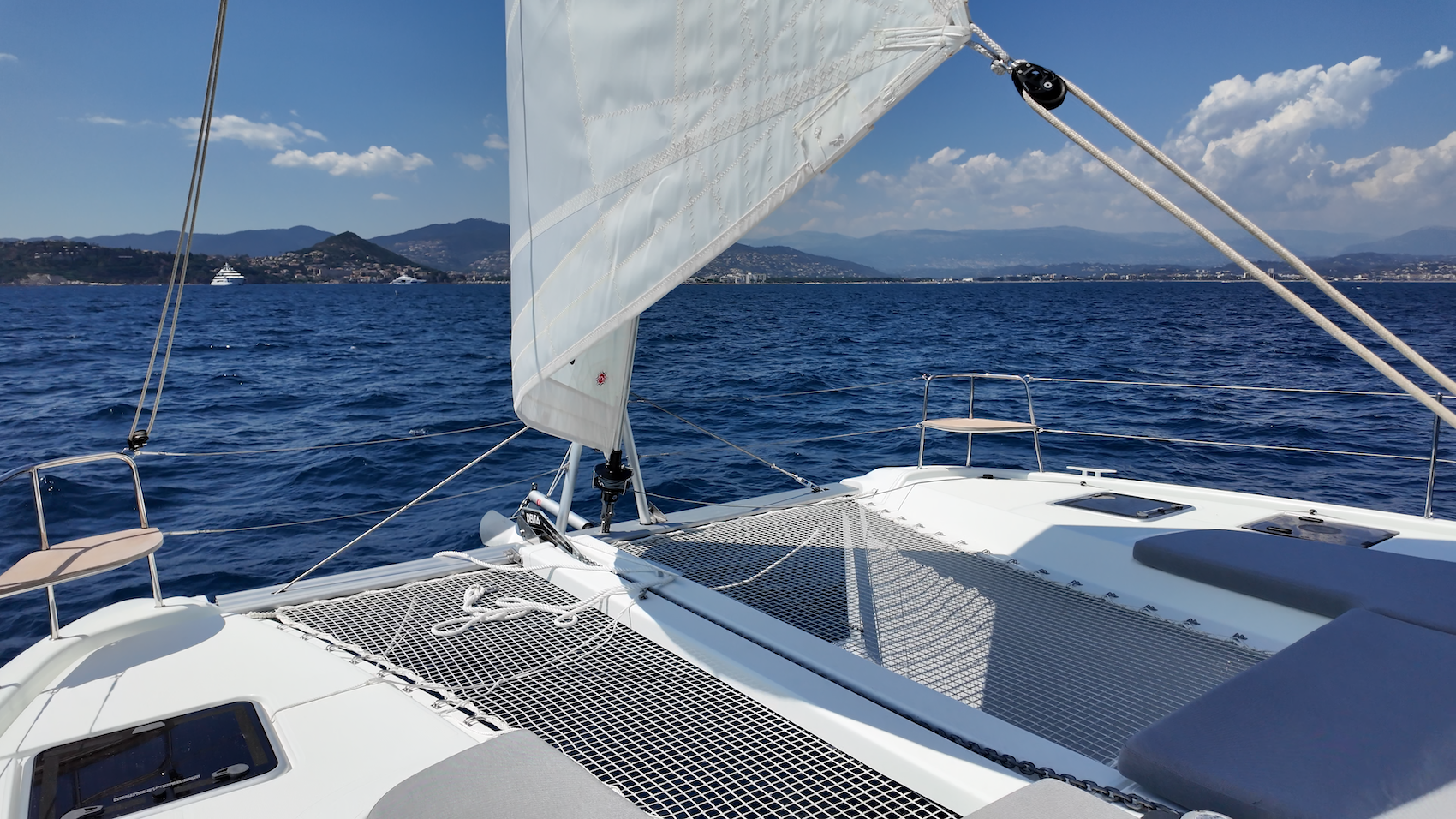
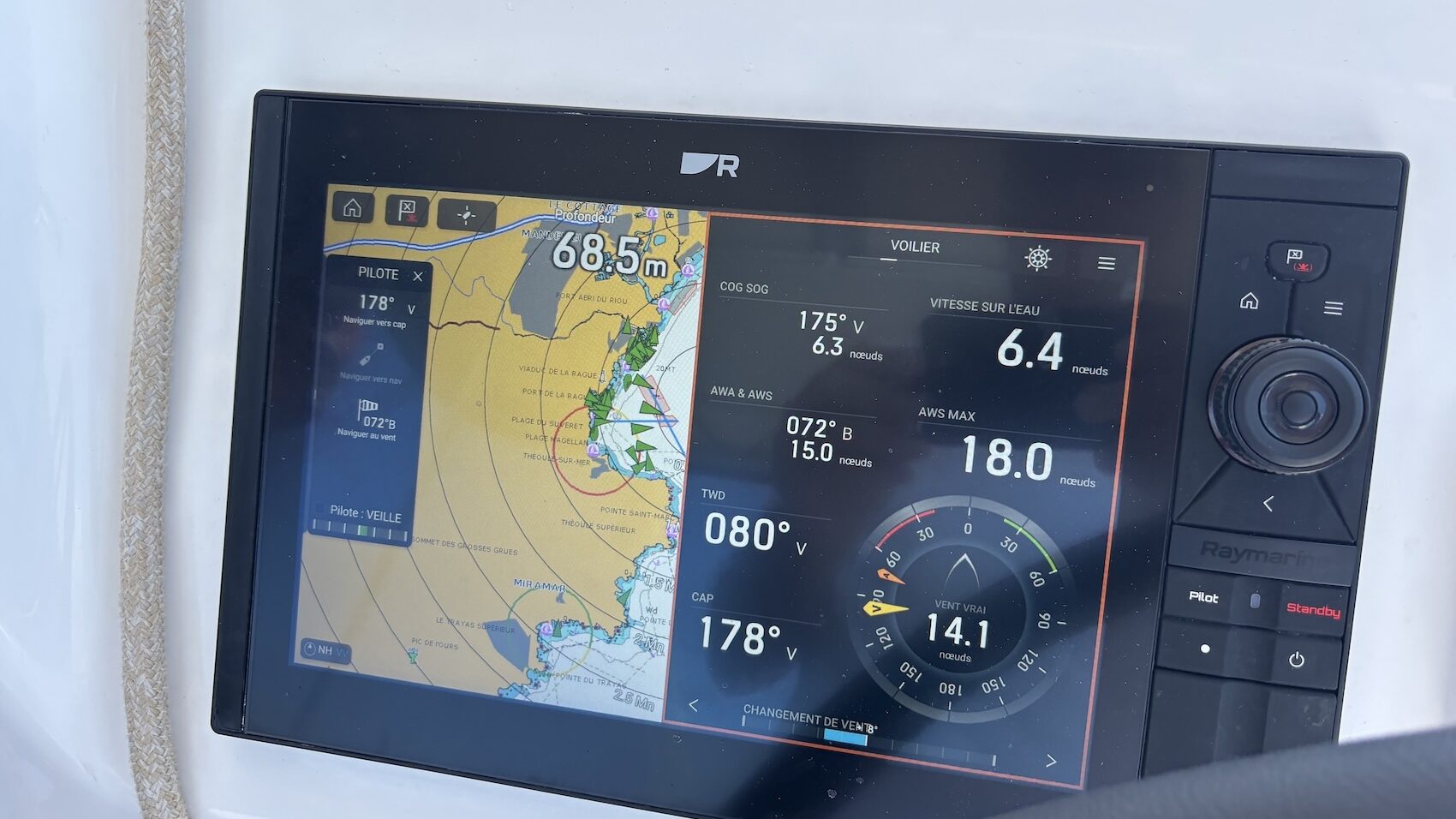
The foredeck offers an impressive amount of living space, with a large trampoline, two comfortable lounges complete with chaise longues, a centrally positioned anchoring system, and the classic forward seats where you can sit back and enjoy the view while underway. I head up to approximately 80 degrees true wind angle (TWA), steering a true course of175 degrees. With 14.1 knots of true wind, the boat logs 6.4 knots through the water—not bad at all considering we’re sailing with only the self-tacking jib.
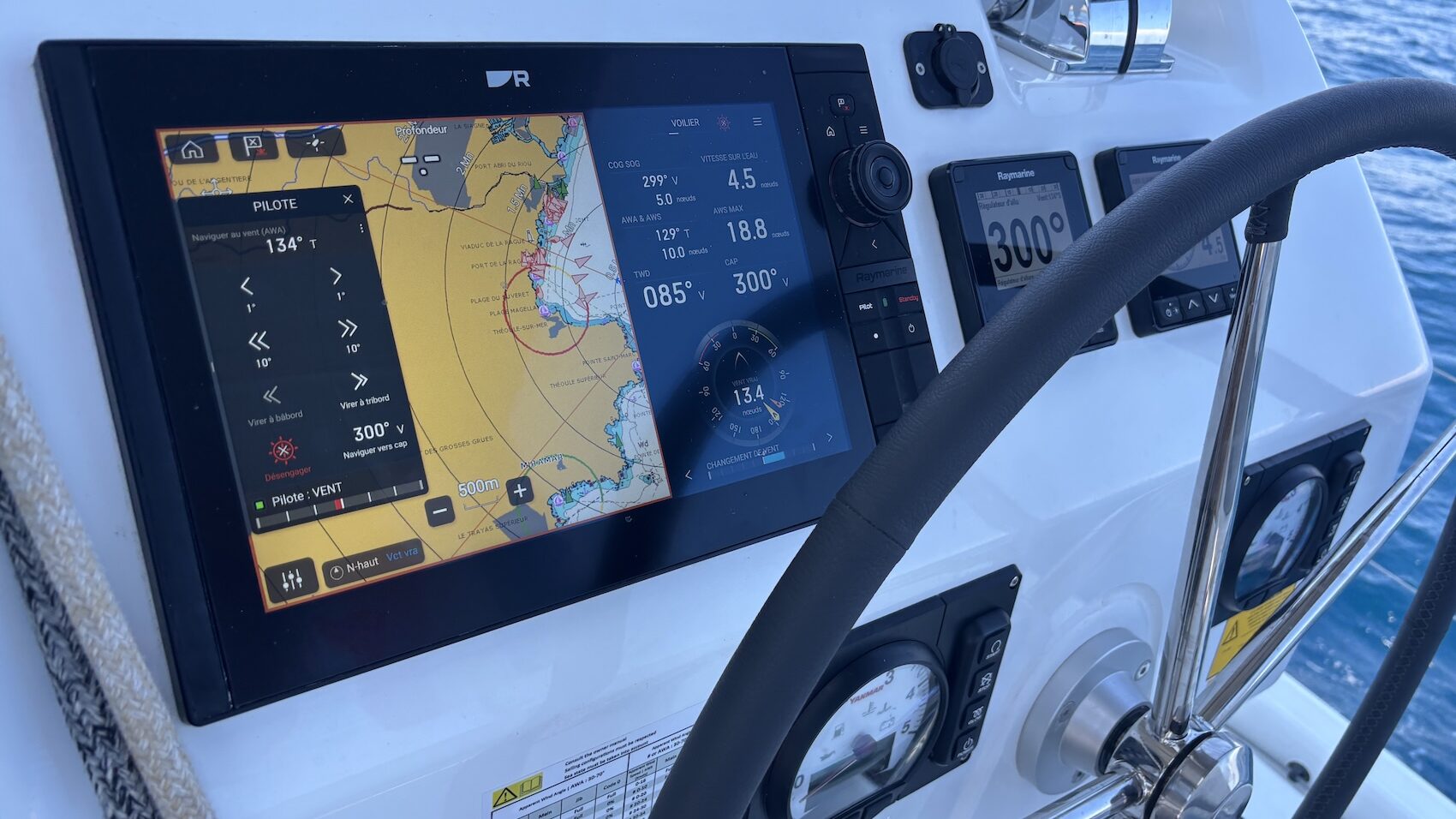
At this speed, the Lagoon 38 delivers an excellent ride. It remains well-balanced over the waves without excessive rolling. I then bear away, easing both the mainsail and jib on my own, and set a heading of 300 degrees. The actual course over ground settles at 299 degrees due to slight current and leeway. With the true wind angle now at 135 degrees, the GPS shows a speed over ground (SOG) of 5.0 knots, while the log reads 4.5 knots through the water, indicating we’re benefiting from a favorable current.
I return to a beam reach to build speed again, and once we’re back to around 6 knots I tack fairly quickly to minimize speed loss. With a light displacement of 10.24 tons, the Lagoon 38 rewards smooth, efficient maneuvers, especially in lighter winds where preserving momentum is essential.
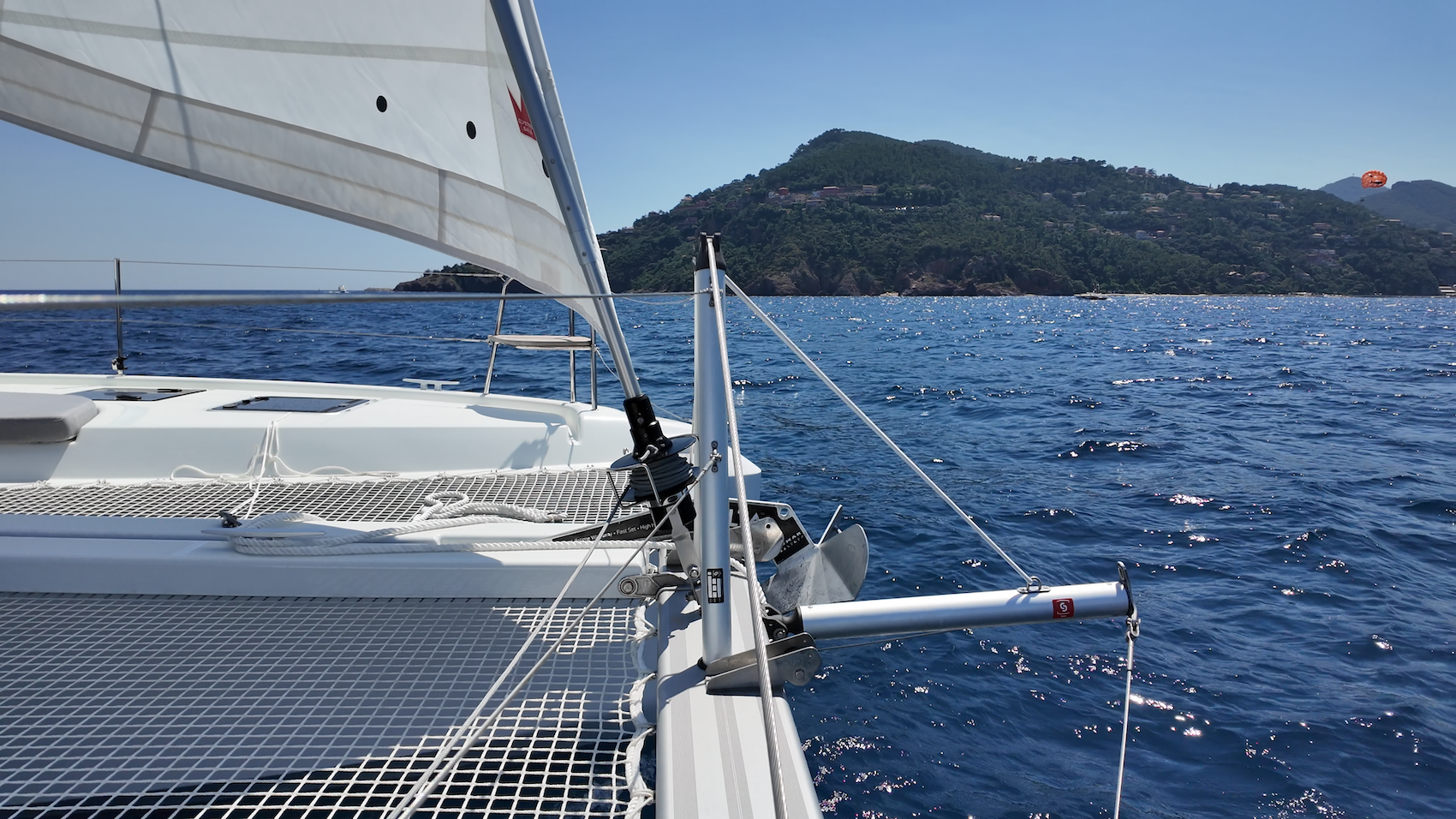
The Lagoon 38 really comes into its own on reaching angles, with the wind between 90 and 140 degrees off the bow. The boat feels extremely stable, glides effortlessly, and with a healthy breeze of 12 to 15 knots or more comfortably maintains speeds between 6 and 8 knots with virtually no heel or strain. Its sweet spot is around 55 to 60 degrees to the true wind; try pointing higher, around 40 to 45 degrees, and boat speed begins to drop. The sail plan is intentionally conservative, making the boat remarkably forgiving and difficult to overpower, even for cruising families or less experienced sailors. As mentioned earlier, all sail controls are led aft to the helm station, allowing every maneuver to be performed safely from a single position. Under power, the twin 29 HP engines cruise comfortably at around 2,200 to 2,400 rpm, pushing the boat at approximately 6.5 to 6.8 knots with an excellent cruising stride while consuming just 3.5 to 4 liters per hour combined—an impressively efficient figure.
Lagoon 38 – Interior
The Lagoon 38 is available in more than ten different layout configurations to suit a wide range of cruising styles. Buyers can choose a four-cabin, four-head version or the owner’s layout, where one entire hull is dedicated to a spacious private suite. The cockpit is exceptionally roomy, and the large sliding glass door seamlessly connects the cockpit with the salon, creating one continuous living space while eliminating barriers and making movement throughout the boat remarkably fluid.
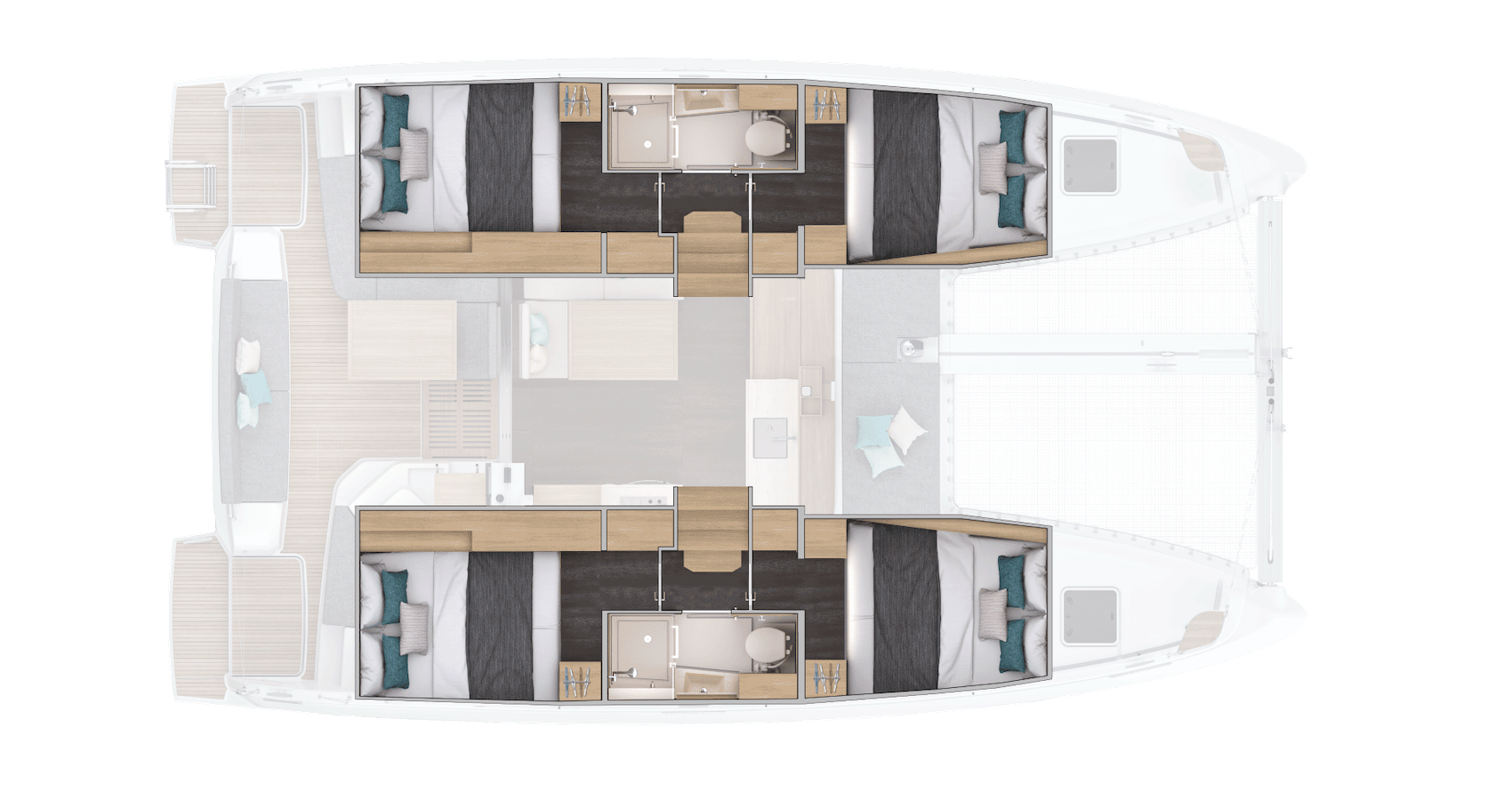
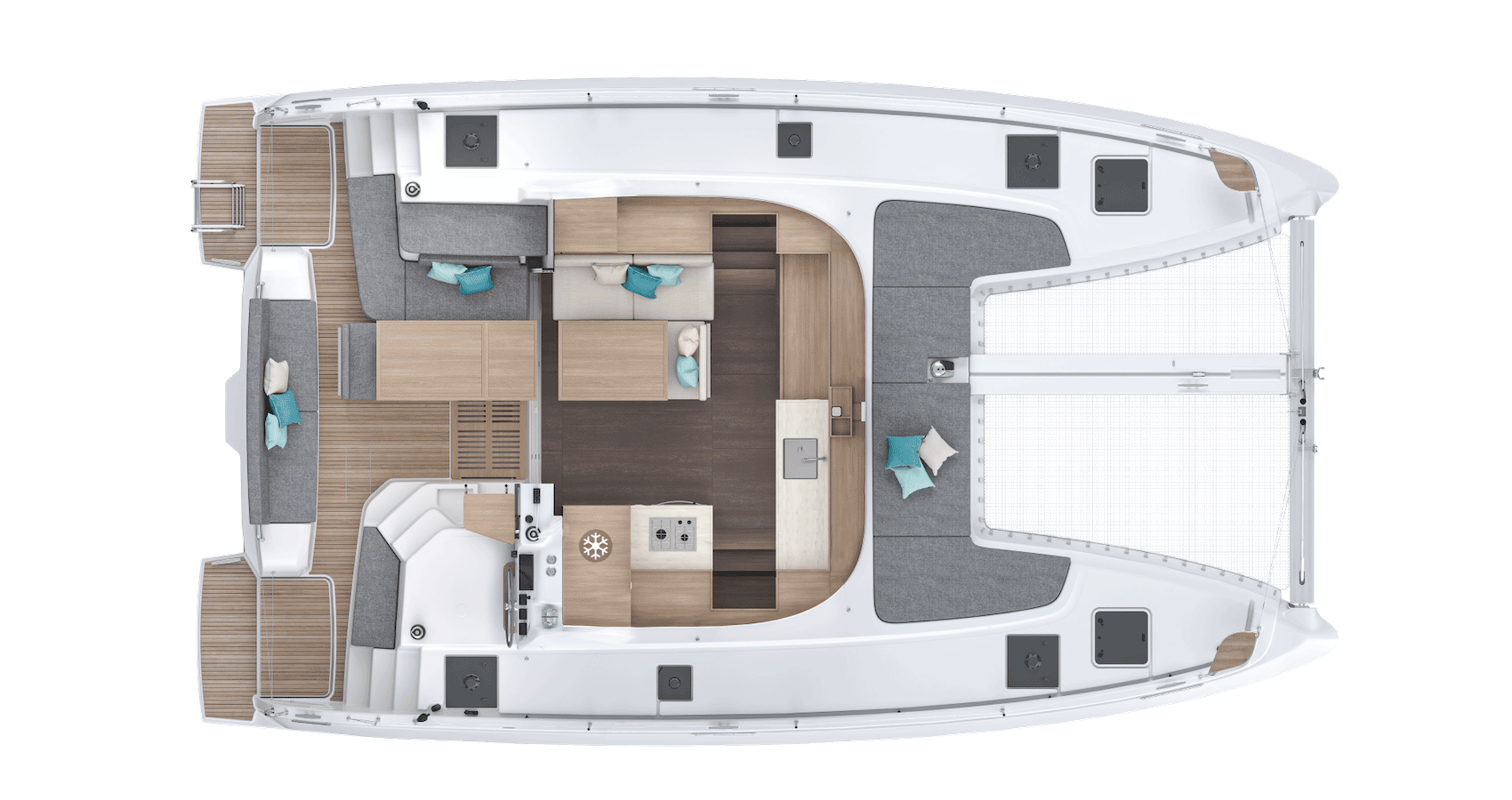
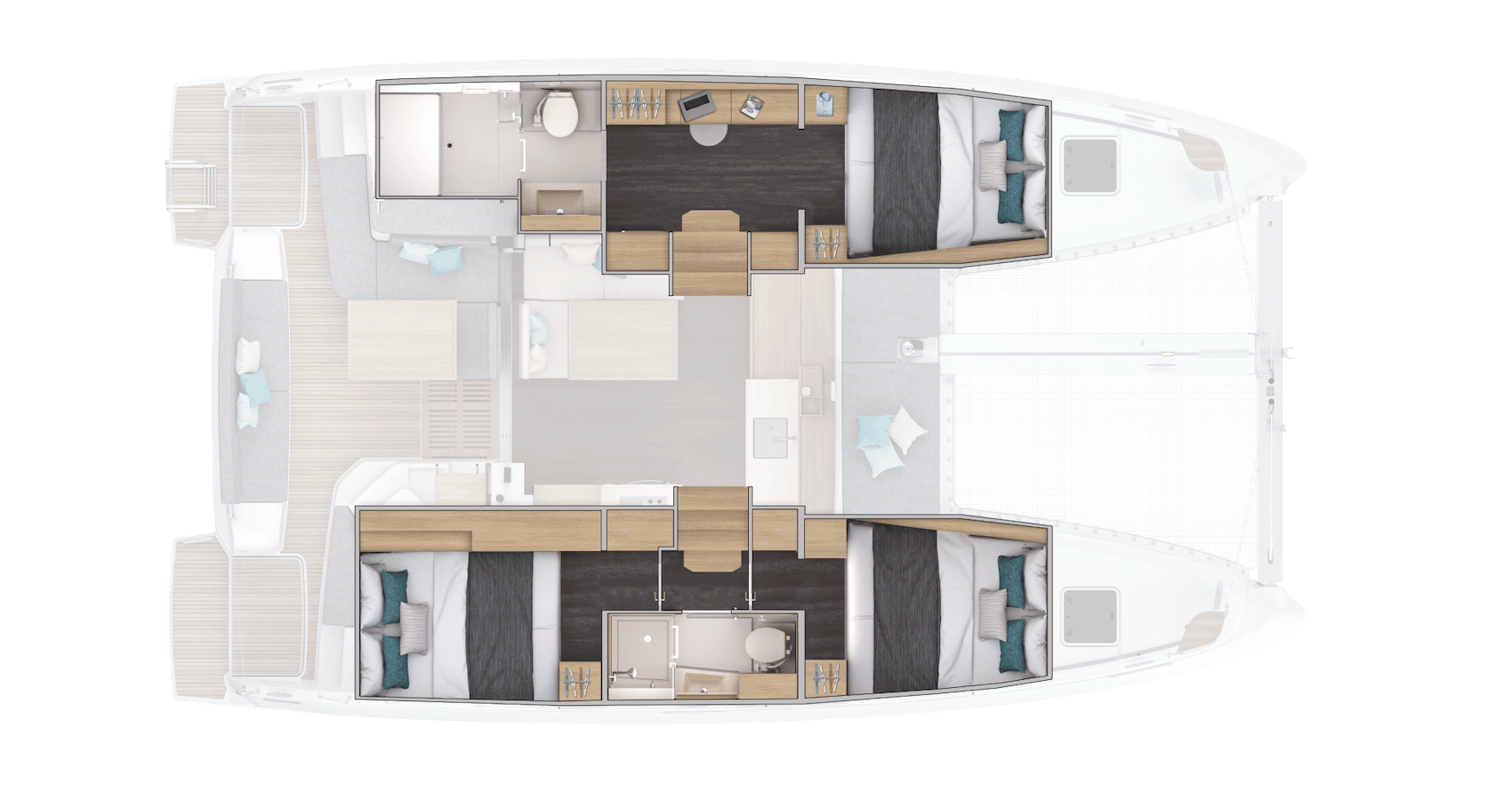
Although compact by today’s multihull standards, the Lagoon 38 proves that exceptional comfort doesn’t require excessive length. Its intelligent use of both interior and exterior space, combined with the seaworthiness that has enabled hundreds of families to embark on bluewater adventures, makes it a standout cruising catamaran. At the upcoming Cannes Yachting Festival, Lagoon will showcase its entire range and will also unveil the all-new Lagoon 47 in its world premiere.