





 The source for international yachting & marine news



Marinas are transforming into yachting resorts.
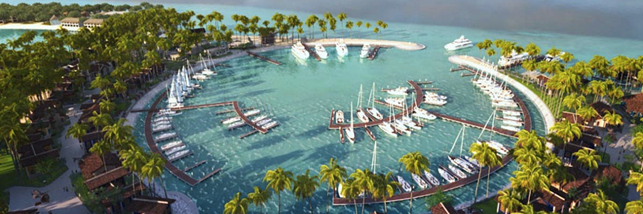
Marinas are intensifying their activities from simple docks where small pleasure boats find their berths, to multidisciplinary locations for nautical lifestyle experiences. “Marinas must treat visitors like hotel guests,” said Alberto Galassi, CEO of the Ferretti Group at the Icomia World Marinas Conference. The digitalization of services, the need for berths for larger yachts, and the standardization of online services are the challenges for marina operators. Market research predicts a positive decade ahead if marinas can provide the comprehensive experience that boat owners should desire.
Author Hans Buitelaar
Monday, October 20, 2025
Both the U.S. market research agency “Growth Market Reports” and the UK’s “Market Research Future” have studied the global marine industry this year and calculated that this sector can grow in the next decade. Their exact findings vary somewhat, but both research organizations concluded that the global marina market currently represents an annual revenue of about $20 billion. They agree that this figure could increase to around $30 billion in the coming decade.
Urban Escapes
Researchers identify trends and challenges for the sector: with further increases in global urbanization combined with (in the first world and the wealthy populations of emerging and developing countries) greater spending power, there is demand for leisure activities on and by the water. Escaping from busy metropolitan areas, boaters and yachts will need maintenance and repair services at the marina, as bringing the boat home to cities is often not an option. Coming to their boats, the urban boating community wants to relax and enjoy the company of fellow boaters. Marinas are already transforming from docking facilities for boats to navigation hubs with carefree boat maintenance services alongside hospitality services such as restaurants, playgrounds, supermarkets for onboard supplies, and chandlers.
Ports to Resorts
Small-scale marinas in urban areas have little room for expansion, and medium-sized marinas may not have growth potential. Growth opportunities, researchers from the UK emphasize, lie with larger marinas. There, spas can be added to the luxury experience. More restaurants can offer a wider choice. Nautical festivals can attract non-boating audiences and entertain marina guests. These large marinas can also find space to accommodate larger yachts. U.S. researchers identify a growing demand for eco-friendly recreation. Owners looking for a place to dock their boat may feel better at home in a marina that has invested in renewable energy resources, offers environmentally friendly products and services, and values the natural environment—after all, enjoying clean waters is what leisure sailors want to do.
Concentration
A third trend not specifically identified by research firms is the rapid consolidation of marinas into conglomerates. Twenty to fifteen years ago, most marinas were local businesses owned by port masters who were present at the marina every day themselves. Today, marinas with their often extensive properties and incorporated companies are increasingly being taken over by marina groups such as IGY Marinas, Yacht Haven Group, Premier Marinas, or Safe Harbor Marinas. The advantage of belonging to a larger group is the availability of funds to invest in new facilities and services. The downside is that decisions are made at the conglomerate’s headquarters based on figures and profit, while the people running the business no longer know the individual berth holder.
Standards
In mid-October, delegates from marinas and marina conglomerates from around the world gathered in Venice, Italy, for the Icomia World Marinas Conference. Icomia President Frank Hugelmeyer called for cooperation. “The competition is not ourselves,” he proclaimed in the opening speech, setting water and sea-based recreation apart from the other—land—form of leisure. Hugelmeyer urged marina professionals to seek standards for online services. For people on boats, booking a berth online can be simplified if all marinas use the same booking systems or at least compatible ones. The need to download a new app on their smartphone at every marina certainly does not help them adapt to digital services.
Demanding Owners
Transformation from boat parking lots to hubs of nautical experience at sea, responding to customer demand, Oliver Dörschuk, CEO of the marina automation software company D-Marin argues. His company’s study on customer experience in Mediterranean marinas revealed increasingly demanding customers. From the peak demand for new and used boats during the COVID pandemic, new boat sales have declined. The only segment in the boat building market that has grown is superyachts. Customers who own yachts longer than 24 meters tend to be more demanding than skippers of small and medium-sized yachts. Marinas today have empty berths at docks for small boats and waiting lists for large yacht slips. Media from professional marina operators report dozens of special marina plans for superyachts or ongoing constructions currently.
Including the Young
Having the money to buy a yacht over 24 meters usually happens to boaters later in life. Even buying a new or moderately sized used yacht is something that many twenty-somethings cannot afford. Bryan Redmond, CEO of Suntex marinas, thinks about the future of the industry in more than a decade and reflects on how to bring young people into marinas and boating. He argues that sailing clubs and shared ownership programs should be actively engaged by marina operators. Active sailing and water recreation, made possible at affordable costs, he describes as “gateways to boating”: “Creating emotional and experience-driven connections is key to keeping newcomers engaged.”
Market Research Reports:
https://www.marketresearchfuture.com/reports/marinas-market-31282
https://growthmarketreports.com/report/marina-development-market